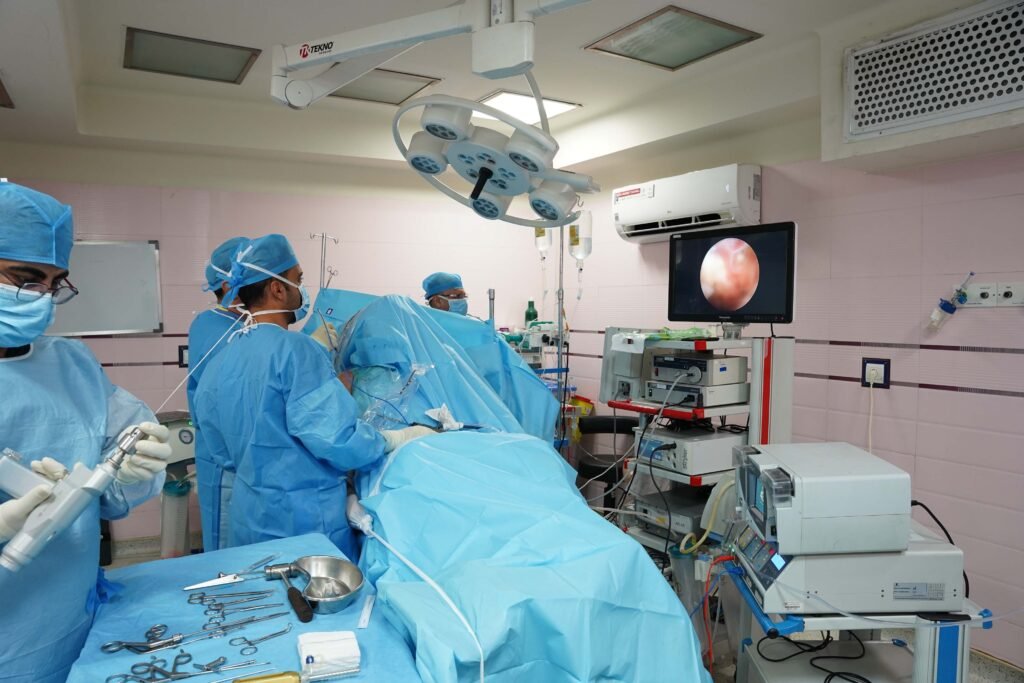
Laparoscopic surgery is a minimally invasive surgical approach in which a camera and specialised instruments are introduced through small incisions. It can be used for selected abdominal and general surgical procedures, but whether it is appropriate depends on the diagnosis, examination findings, imaging, previous surgery and the individual patient’s overall condition.
When laparoscopic surgery may be discussed
A surgeon may consider a laparoscopic approach for conditions such as gallbladder disease, selected hernias, appendicitis and some other abdominal problems. The choice is not based on incision size alone. The expected benefit, complexity of the operation, previous procedures and the possibility that an open operation may be safer are all considered.
Assessment before surgery
Evaluation usually starts with the patient’s symptoms and medical history, followed by examination and any appropriate tests or imaging. Depending on the planned procedure and the patient’s health, pre-operative assessment may also include blood tests and anaesthesia review. Patients should tell the surgical team about medicines, allergies, previous operations and important medical conditions.
What patients should discuss with the surgeon
Before an operation, patients should understand the working diagnosis, why surgery is being considered, reasonable alternatives, expected recovery and the important risks relevant to their procedure. It is also useful to ask whether conversion from laparoscopic to open surgery might be necessary if safe completion through small incisions is not possible.
Recovery after a laparoscopic procedure
Recovery varies substantially according to the operation and the patient. Smaller incisions may reduce wound discomfort for some procedures, but they do not remove the need for internal healing. Activity, diet, wound care, bathing, driving and return to work should therefore follow the instructions given for the specific operation rather than a generic timetable.
When to seek urgent medical attention
After surgery, rapidly worsening abdominal pain, persistent vomiting, difficulty breathing, high fever, significant bleeding, increasing redness or discharge from a wound, or any sudden deterioration should be assessed promptly. The exact warning signs can differ by procedure, so the discharge advice from the treating team should take priority.
Patient information: This page is general educational information and does not replace an examination or an individual treatment plan. The final surgical approach should be decided after clinical assessment and discussion of benefits, alternatives and risks.