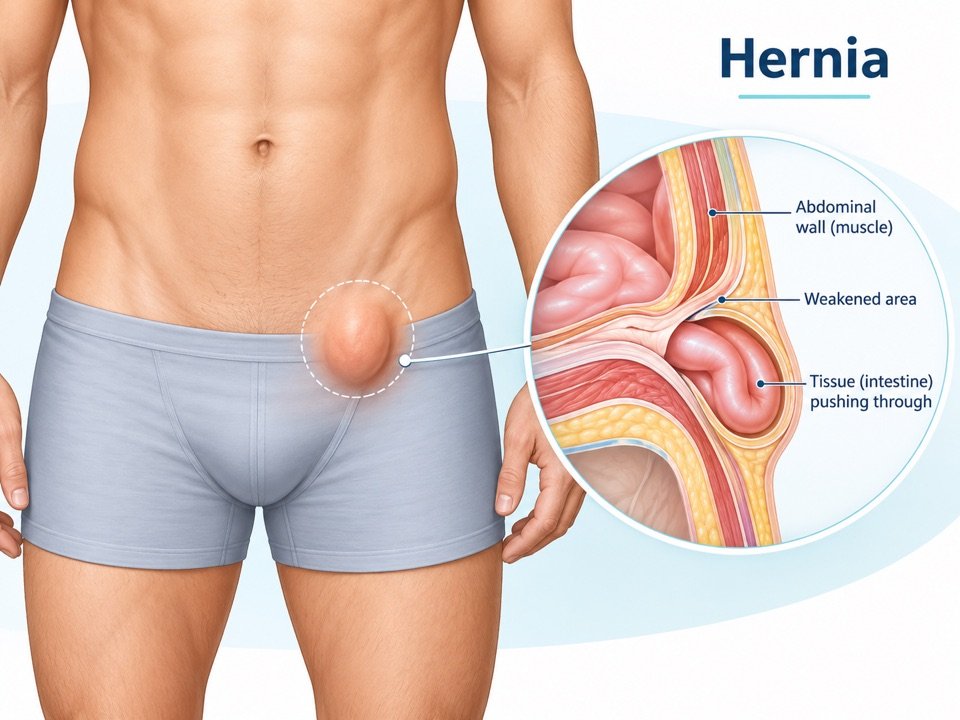
A hernia occurs when tissue pushes through a weak area or opening in the abdominal wall. Common examples include groin, umbilical and incisional hernias. A swelling may be more noticeable when standing, coughing or straining, although the appearance and symptoms vary from person to person.
How a hernia is assessed
Diagnosis often begins with a clinical history and physical examination. Imaging may be useful when the diagnosis is uncertain, symptoms are unusual or the surgeon needs more anatomical detail before planning treatment.
When repair may be discussed
The decision to repair a hernia depends on its type, size, symptoms, effect on daily activity, examination findings and the patient’s overall health. Some hernias may be monitored, while others are better treated surgically. The appropriate approach should be individualized rather than based only on the presence of a lump.
Open and laparoscopic options
Hernia repair may be performed through an open incision or, for selected patients, with a laparoscopic approach. The surgeon should discuss which method is suitable, whether mesh is expected to be used, the relevant risks and the possibility that the final operative plan may change for safety reasons.
Preparing for surgery and recovery
Before surgery, patients should discuss medicines, allergies, previous operations and other medical conditions. Recovery instructions vary by repair type and should cover wound care, pain control, lifting, exercise, driving and return to work.
When urgent assessment is needed
A hernia that becomes suddenly very painful, cannot be pushed back when it previously could, or is associated with vomiting, abdominal distension, fever or rapid deterioration needs urgent medical assessment.
Patient information: This page is general information and does not replace examination or an individual surgical recommendation.