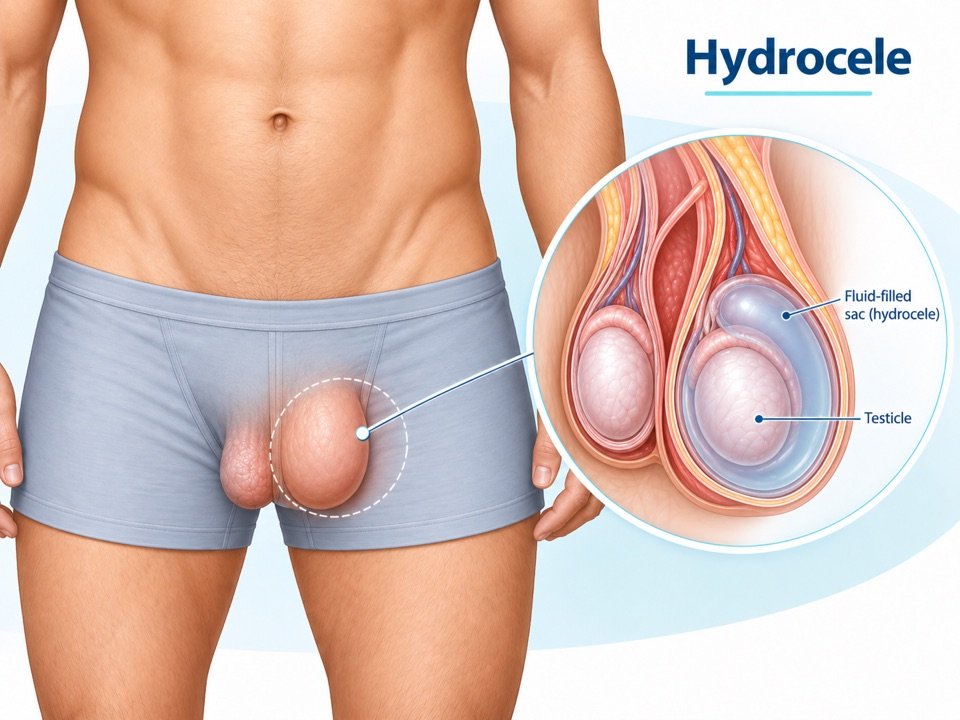
Hydrocele and varicocele are different causes of scrotal swelling or discomfort. A hydrocele is a collection of fluid around the testicle, while a varicocele is enlargement of veins within the scrotum. Because several other conditions can cause similar symptoms, a new or changing swelling should be properly assessed.
How scrotal swelling is evaluated
Assessment generally includes the history of the swelling or discomfort and a physical examination. Ultrasound may be advised when the diagnosis is uncertain, when the testicle cannot be examined clearly, or when the clinician needs to evaluate other possible causes.
Management of hydrocele
A hydrocele that is small and not troublesome may sometimes be observed. Surgery can be considered when swelling is persistent, uncomfortable, large, recurrent or creating another clinical concern. The surgeon should explain the expected benefit, anaesthesia, wound care and relevant risks before treatment.
Management of varicocele
A varicocele may be managed differently depending on symptoms, examination findings and whether fertility or testicular function is part of the clinical concern. Not every varicocele requires an operation, and the indication for treatment should be individualized after assessment.
Recovery after surgery
Recovery depends on the procedure performed. Instructions about wound care, bathing, activity, scrotal support, work and exercise should follow the treating team’s advice rather than a fixed timetable.
Sudden testicular pain needs urgent assessment
Sudden severe testicular or scrotal pain, rapidly increasing swelling, fever, vomiting or a significant injury should be assessed urgently. Acute testicular pain has causes that are different from a routine hydrocele or varicocele and should not be self-diagnosed.
Patient information: This page is general educational information and does not replace an examination or ultrasound when clinically indicated.